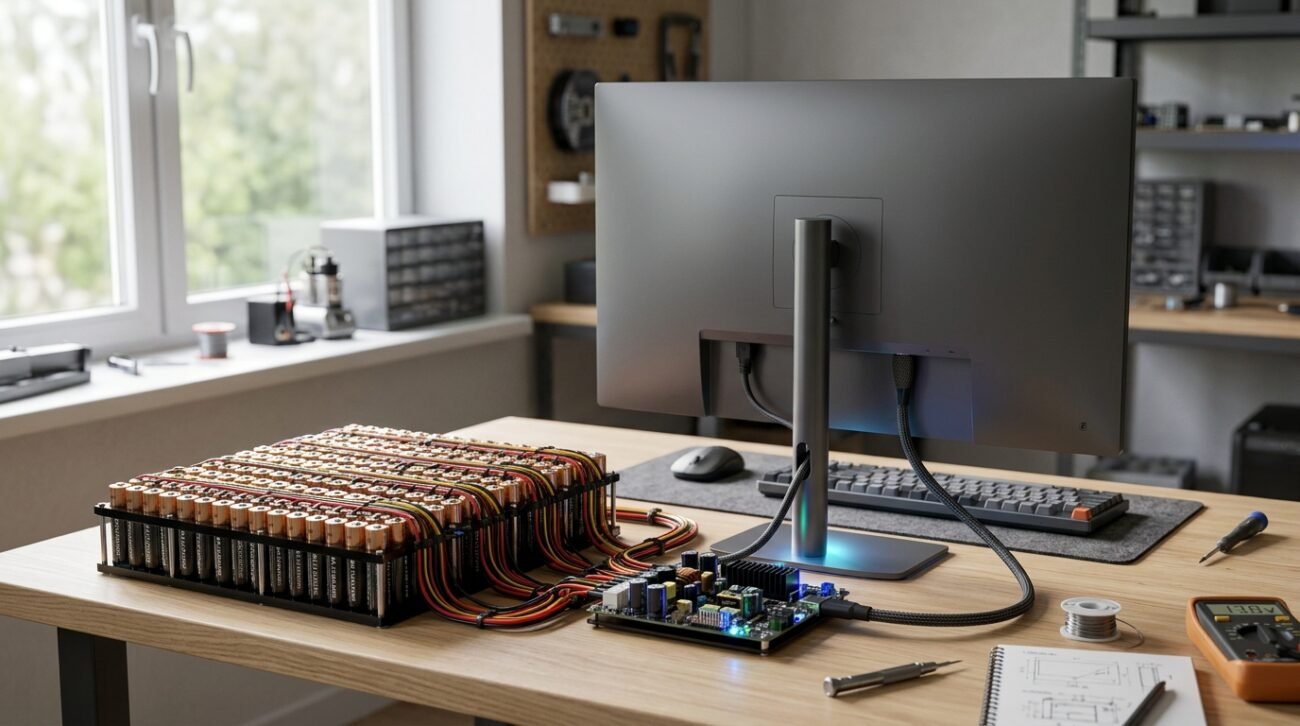
Staring at the tangled nest of power cords behind your desk might make you wonder if there is a more portable way to juice up your rig. Tech experiments covered by Tom’s Hardware reveal that content creator ScuffedBits actually bypassed the traditional wall outlet entirely to answer this exact question. By replacing a standard power supply with household AA cells, this wild experiment tested the absolute limits of casual battery discharge rates.
Rethinking Modern Desktop Power Supplies
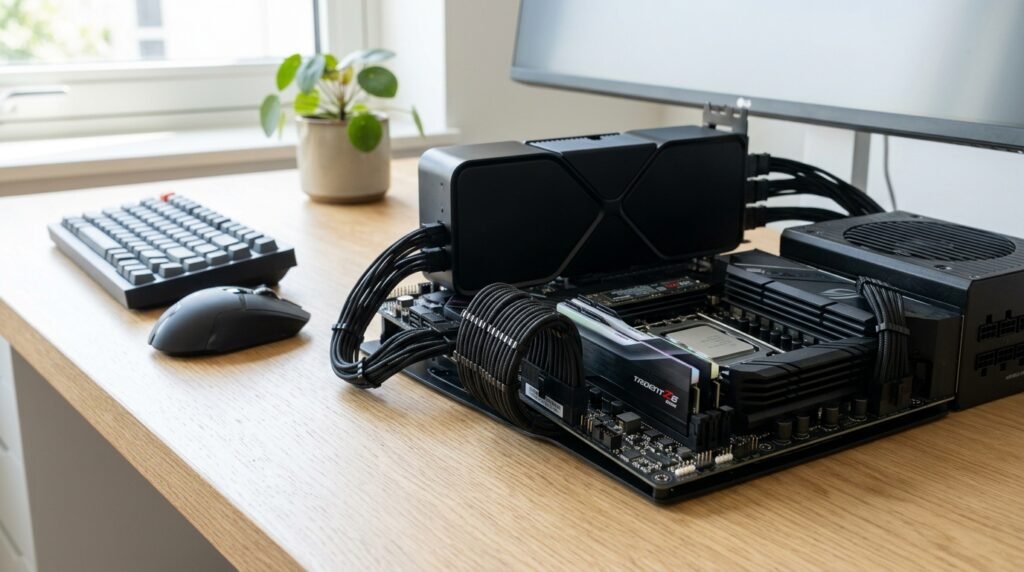
Traditional desktop computers rely on substantial alternating current from household wall outlets. Converting that high-voltage energy down to low-voltage direct current remains the standard job of a bulky internal power supply unit.
Testing the Eight Battery Baseline
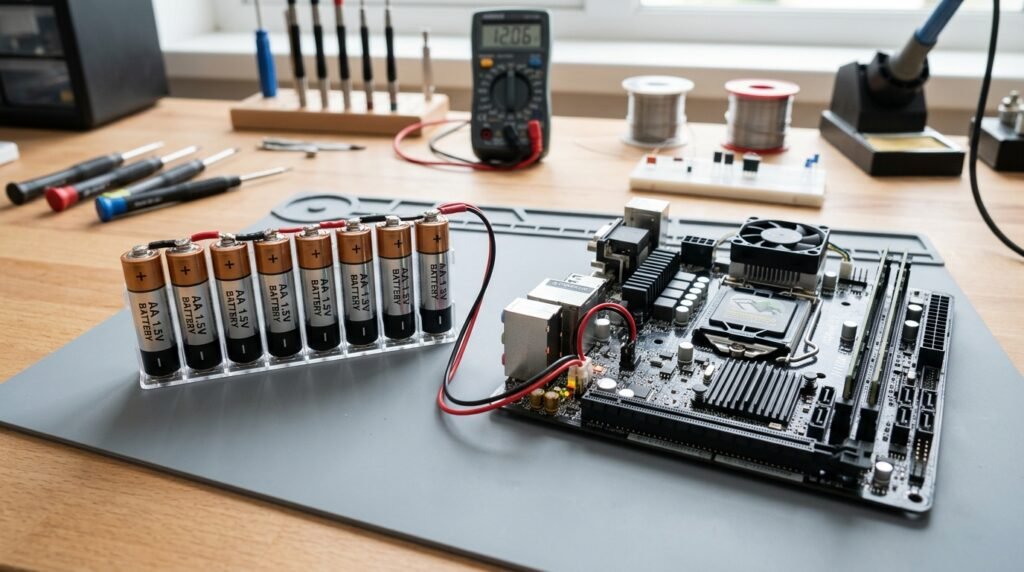
Technically, if you connect eight regular alkaline batteries in series, you will get the 12 volts that a simple motherboard needs. But at first, experiments usually only produce a momentary fan movement.
Discovering the Harsh Reality of Current
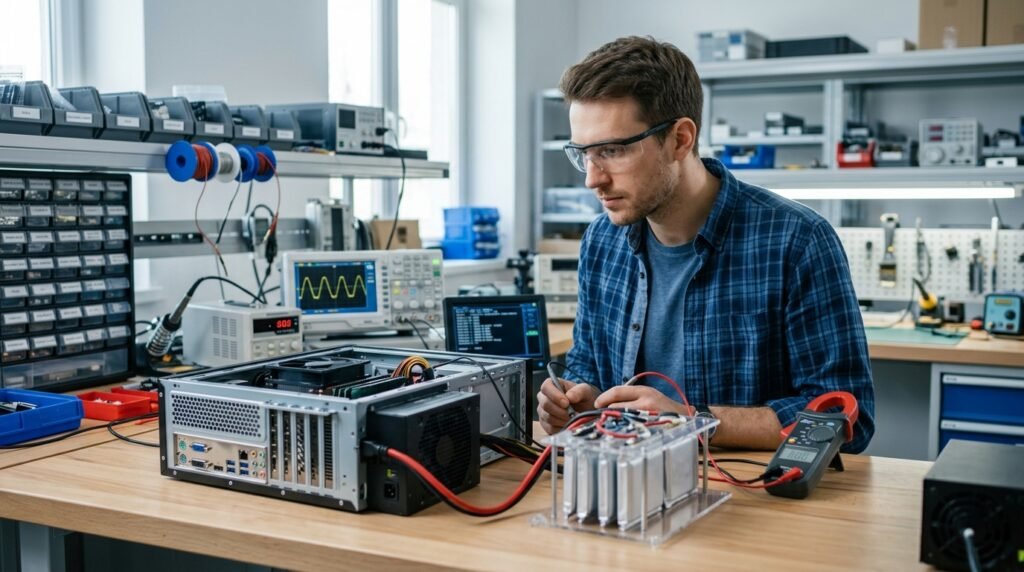
Voltage is only half of the equation when dealing with power-hungry desktop components. Household AA options typically fail to deliver the massive initial current surge needed to successfully initiate a boot cycle.
Ditching Cheap Carbon Zinc Cells
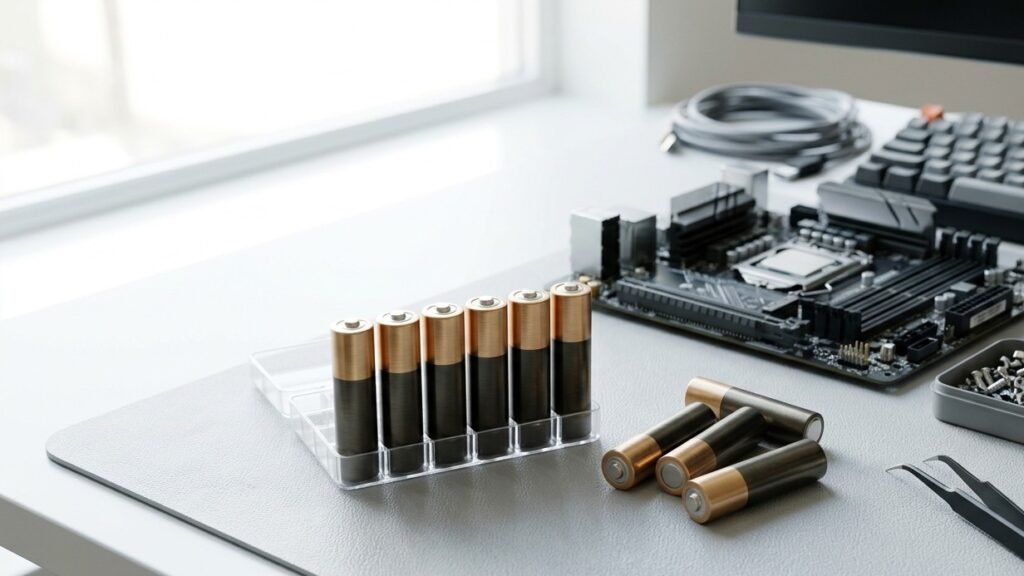
Lower-grade carbon-zinc options generally lack the necessary chemistry to sustain intense electronic loads. Upgrading to high-quality alkaline variants represents an essential first step toward achieving even a momentary system startup.
Scaling Up the Total Cell Count
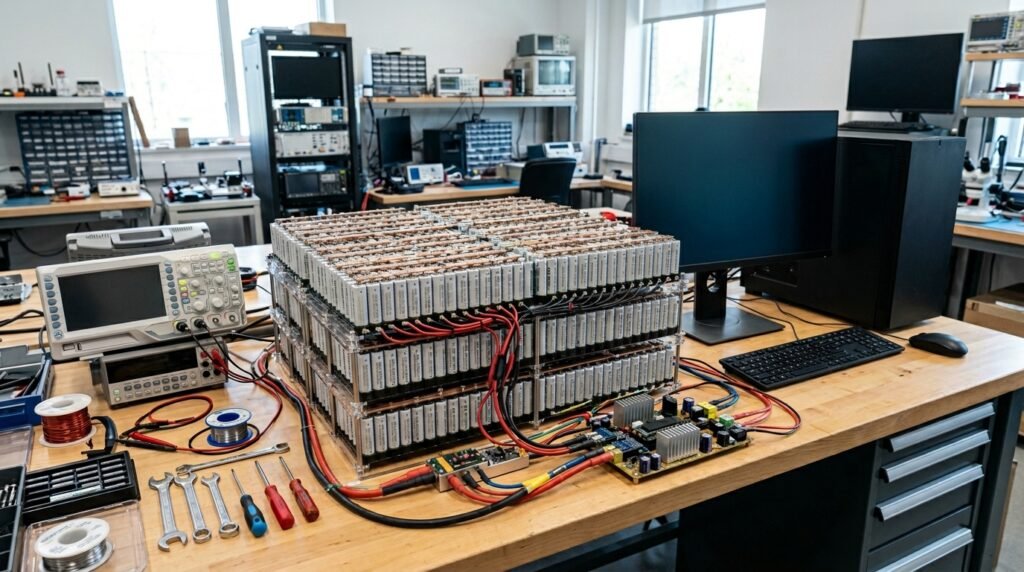
When a small handful of batteries fails, the most obvious solution is to simply add more. The experiment quickly grew to require an impressive array of dozens of individual cells.
Battling Frustrating Voltage Sag Issues
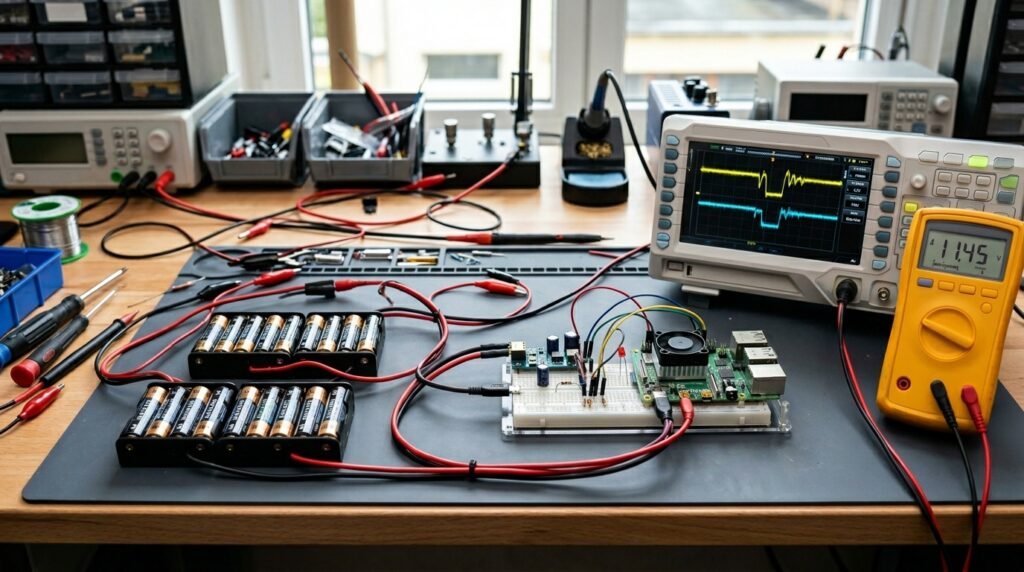
Drawing heavy power from tiny cells causes their internal voltage to plummet rapidly under load. This sudden drop can easily trip the safety cutoffs built right into standard computer hardware.
Bypassing the Wall with DC Adapters
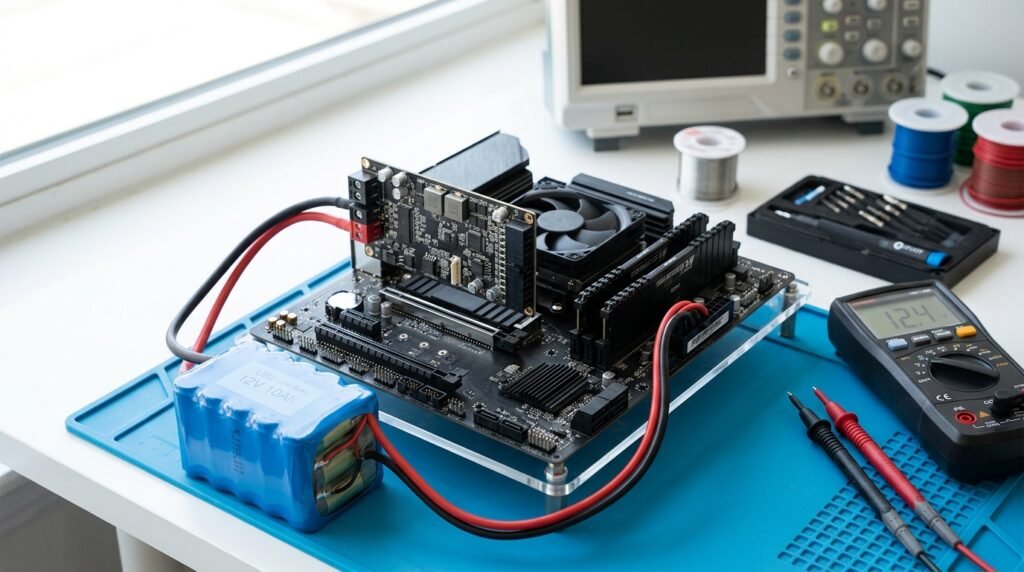
Achieving a direct battery connection requires swapping out the standard power supply for a specialized direct-current adapter. This smaller board accepts low-voltage inputs and distributes power straight to the motherboard.
Achieving a Brief Windows Boot
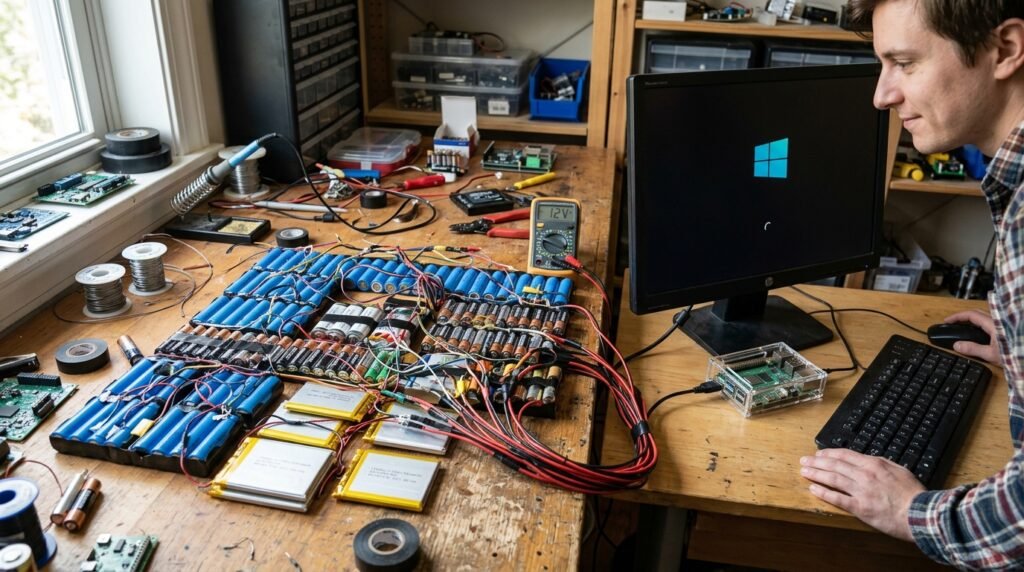
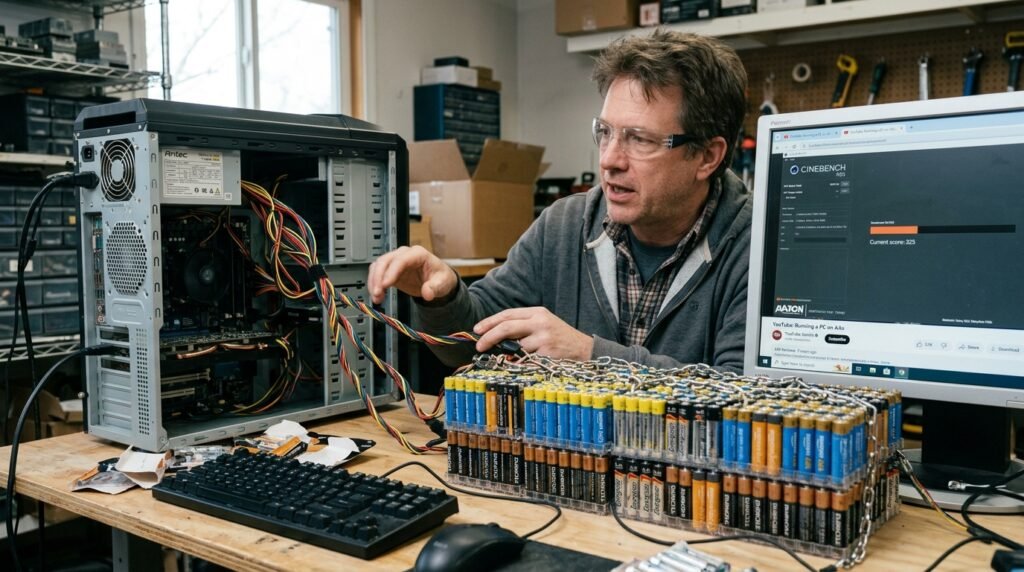
With over fifty batteries finally working together, the makeshift power bank can successfully sustain a light operating system load. Watching a desktop environment load without a wall plug feels truly surreal.
Facing the Minecraft Gaming Benchmarks
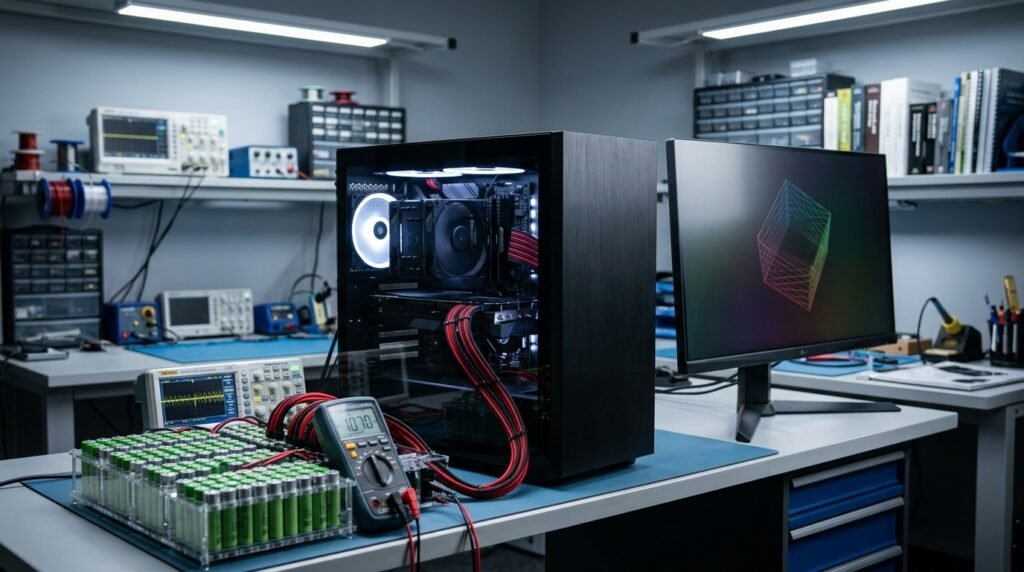
Attempting to launch a simple 3D game immediately strains the limits of the fragile battery array. The sudden power draw can easily drag the system down within just a few minutes.
Upgrading the Experimental System Layout
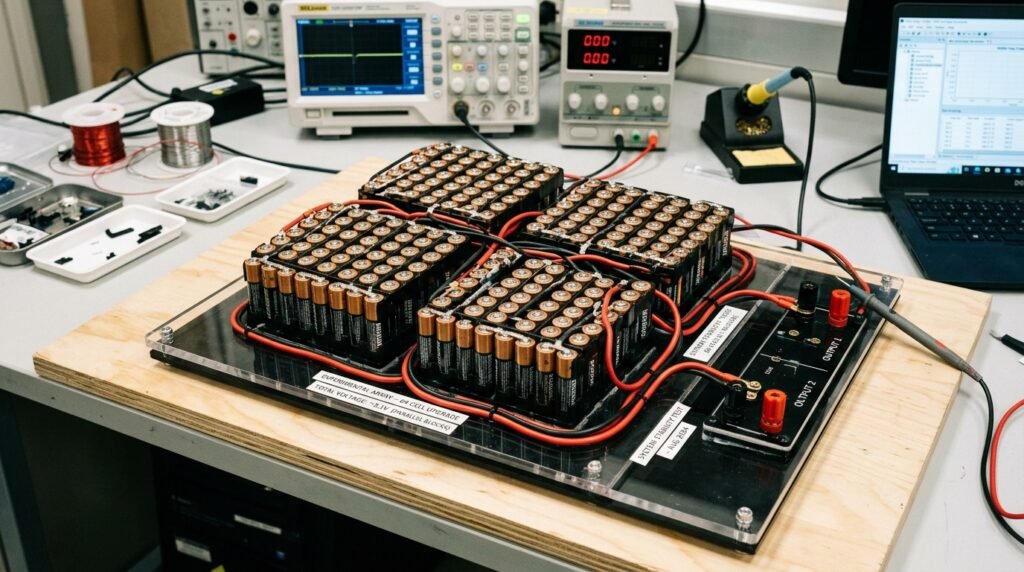
A follow-up attempt scaled the project up to sixty-four individual AA cells for improved stability. This massive layout aimed to address the severe runtime limitations discovered during the original test.
Smashing the Thirty-Minute Runtime Barrier
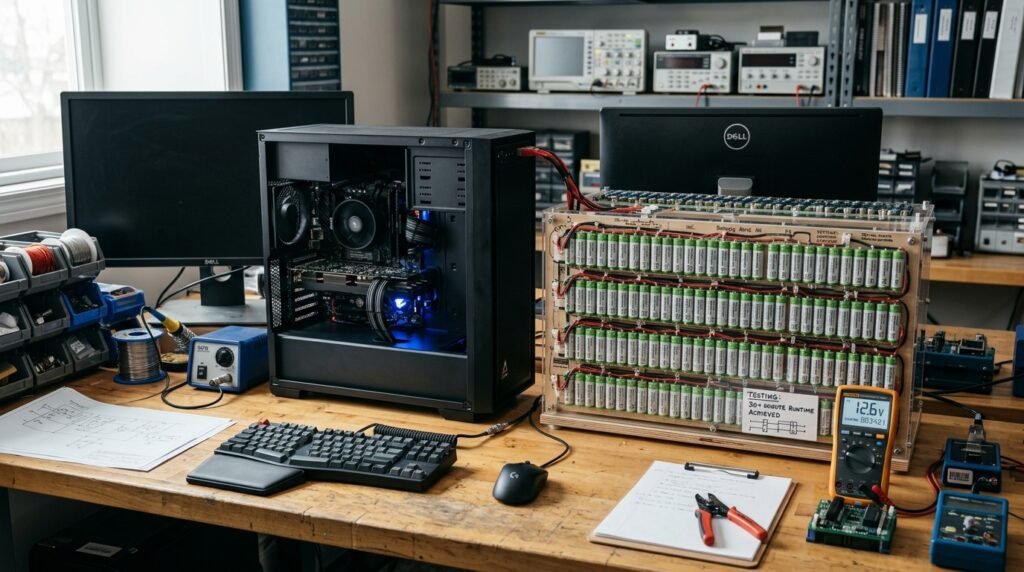
The refined configuration ultimately kept the computer running for more than thirty-three consecutive minutes. The custom battery bank successfully handled basic benchmarking tasks and light gaming before finally depleting.
Appreciating Modern Engineering Marvels
While running a desktop on grocery store batteries makes for an entertaining video, it highlights why portable laptops exist. Densely packed lithium-ion cells remain far superior for sustained high-performance energy delivery.
