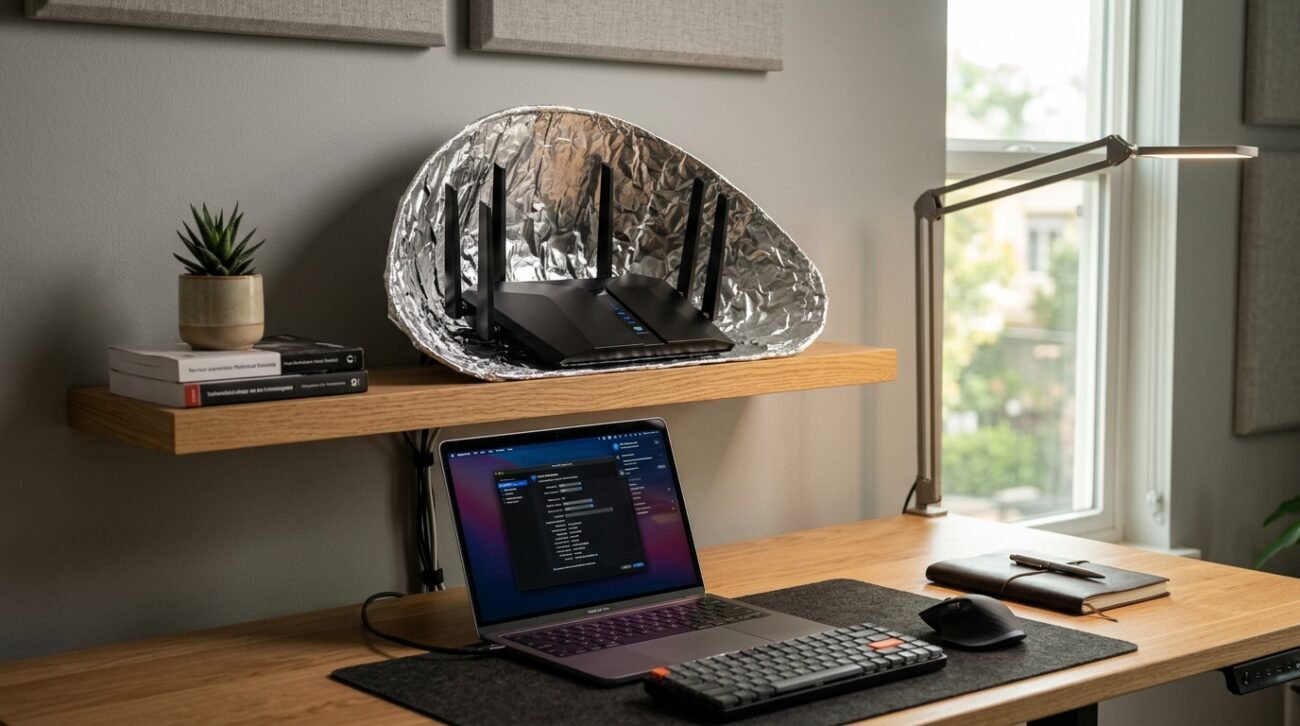
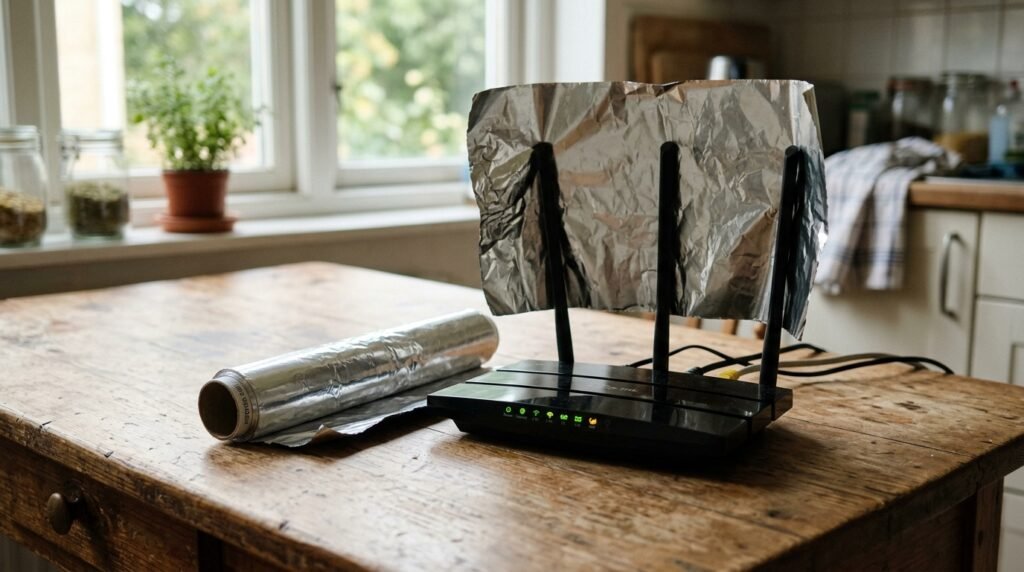
Slow internet has become one of those little details that impacts everything, from movie nights to video calls and smart home gadgets. Aluminum foil was recently wrapped around and underneath Wi-Fi routers to see if it modifies the direction or power of the signal transmitted by the router. The idea isn’t just totally random, surprisingly. Research related to Dartmouth College studies and experiments that are discussed at the Massachusetts Institute of Technology (MIT) examined possible effects of reflective surfaces on wireless signal behavior indoors.
The Reflection Theory
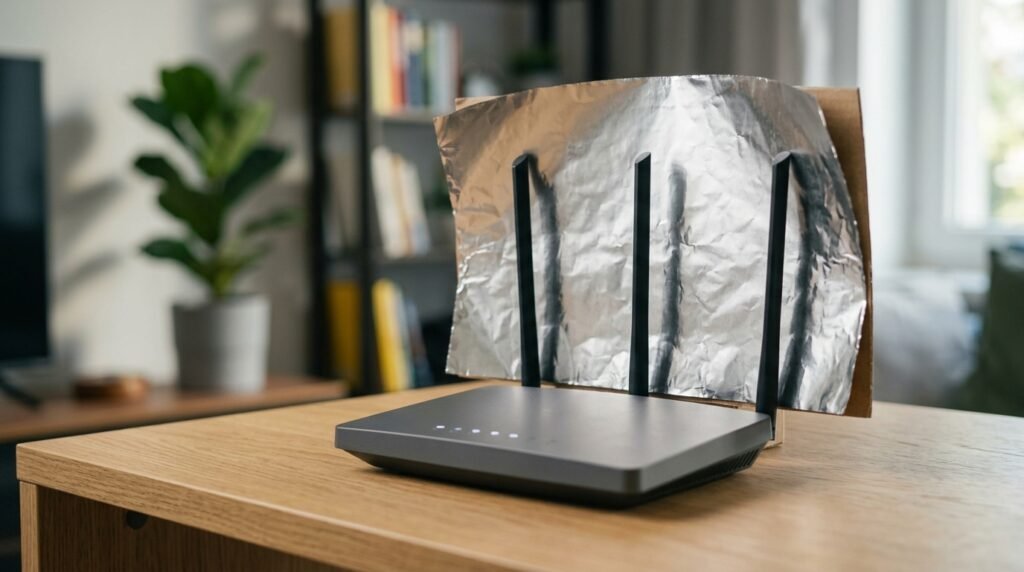
Some engineers compare foil to a basic signal reflector. Instead of boosting power directly, it may redirect part of the router’s signal toward certain areas inside a home.
It Is Not a Magic Booster

Foil usually does not increase internet speed from the provider itself. It may only affect signal direction or reduce weak spots, depending on the room shape and router placement.
Router Placement Still Matters
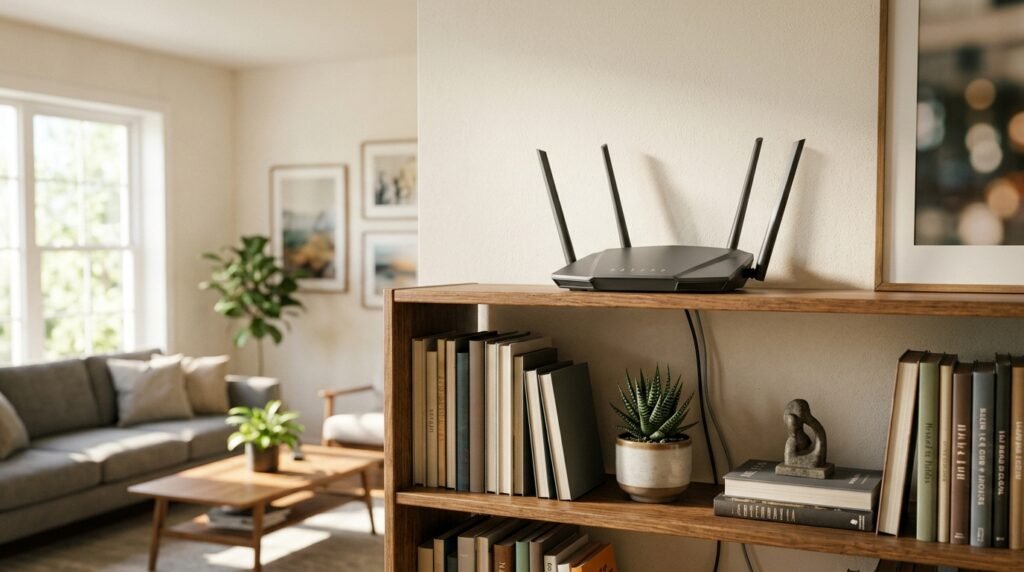
Technology experts often suggest raising routers away from floors and thick walls. Even with foil nearby, placement may remain one of the biggest factors affecting indoor wireless coverage.
Walls Can Disrupt Signals

Concrete, brick, and metal surfaces may weaken Wi-Fi signals. Studies from wireless communication researchers have shown that denser materials can interfere with radio wave movement indoors.
Curved Foil Gets More Attention
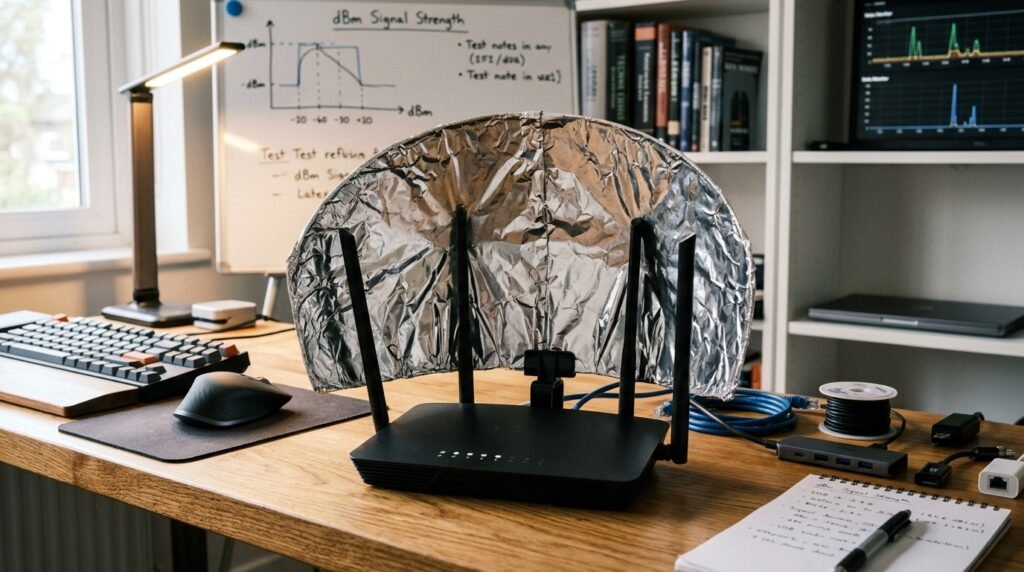
Many online experiments use curved foil behind routers instead of flat sheets underneath them. The curved shape may help reflect signals toward desired spaces more efficiently.
Small Apartments May Notice More

In compact homes or apartments, redirected signals may appear more noticeable because wireless coverage areas are already smaller and easier to influence with reflective surfaces.
It Might Reduce Dead Zones
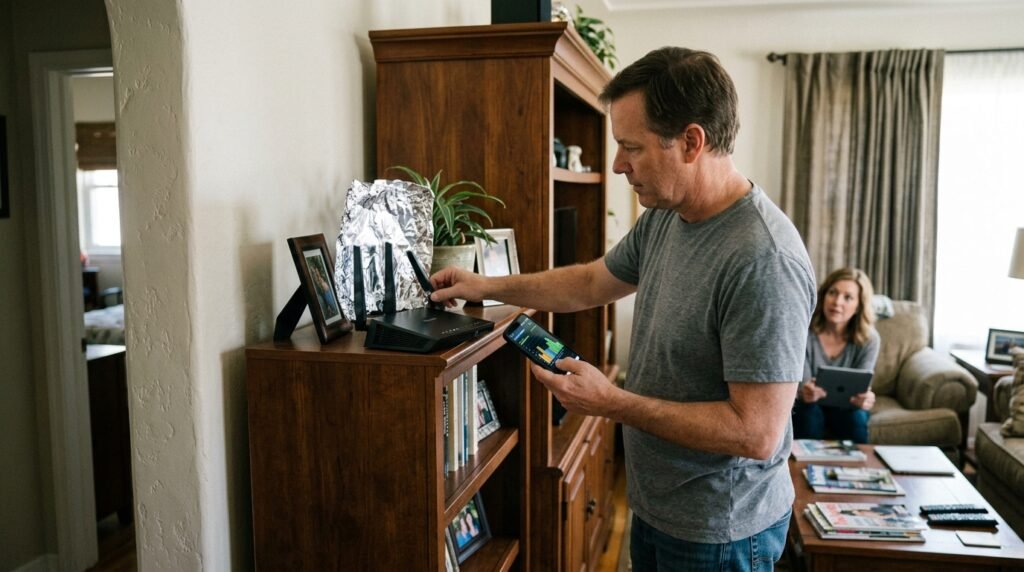
Some people report fewer weak-signal corners after adjusting foil placement. Results may vary widely because furniture, device count, and wall materials all affect wireless performance differently.
Heat Should Not Be Ignored
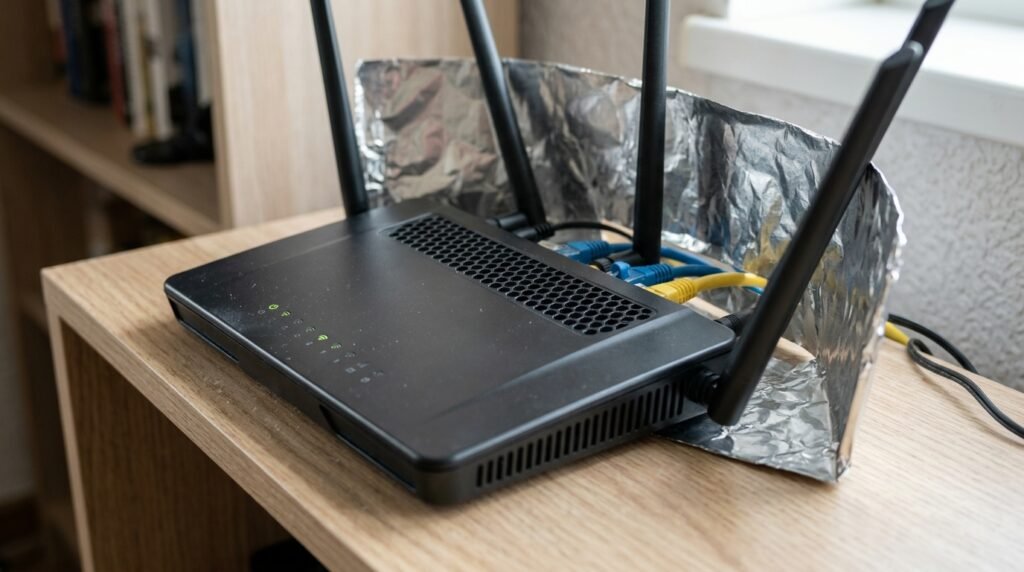
Professionals usually warn against covering router vents completely. Routers naturally produce heat, and blocked airflow could potentially shorten device lifespan or affect performance over time.
Mesh Systems Work Differently
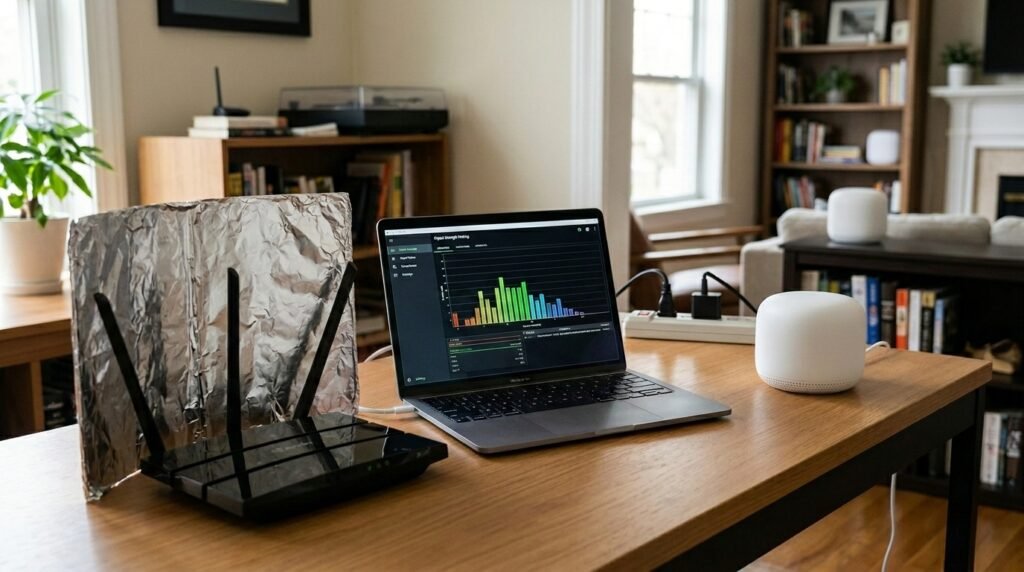
Modern mesh Wi-Fi systems are designed to spread signals more evenly throughout homes. In these setups, foil experiments may provide little noticeable difference compared to standard routers.
Signal Direction Can Matter
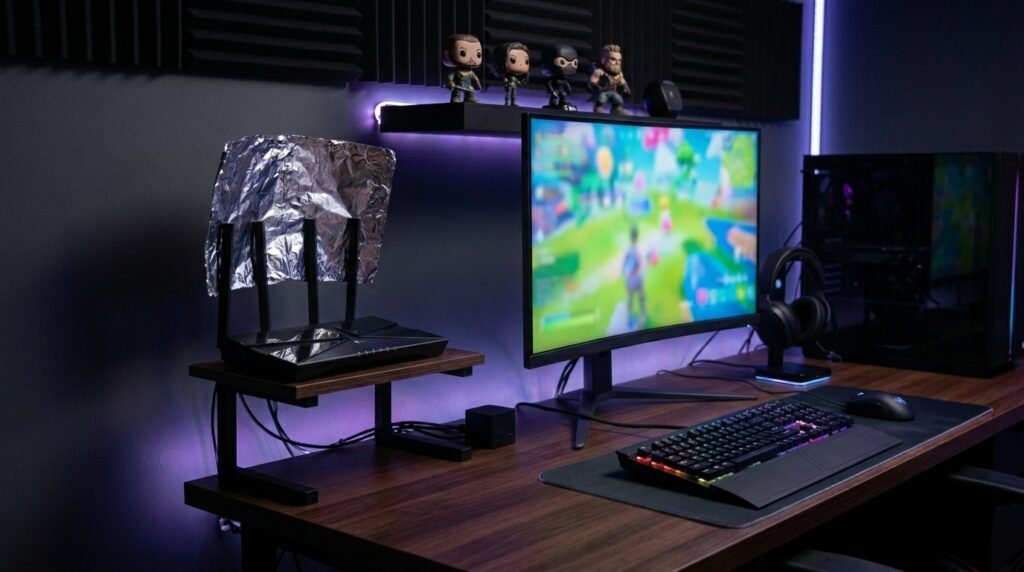
Gamers and remote workers sometimes try directing stronger signals toward desks or entertainment spaces. Reflective surfaces may slightly concentrate coverage in specific directions rather than everywhere equally.
Scientific Interest Is Real

Researchers at Dartmouth College previously tested customized reflectors that appeared capable of shaping indoor wireless signals under controlled conditions, though home foil setups remain far simpler.
Cheap Fixes Attract People
Part of the trend may simply come from affordability. A sheet of kitchen foil costs far less than upgrading routers, buying extenders, or installing professional networking equipment.
Online Videos Fueled the Trend

Social platforms helped popularize the experiment after creators shared before-and-after signal tests. Some demonstrations appeared convincing, although home conditions can differ dramatically from one setup to another.
Testing Is Usually the Best Answer

Because every home layout is different, professionals often recommend testing router positions before spending money. Sometimes, a small adjustment alone may improve coverage more than expected.
